

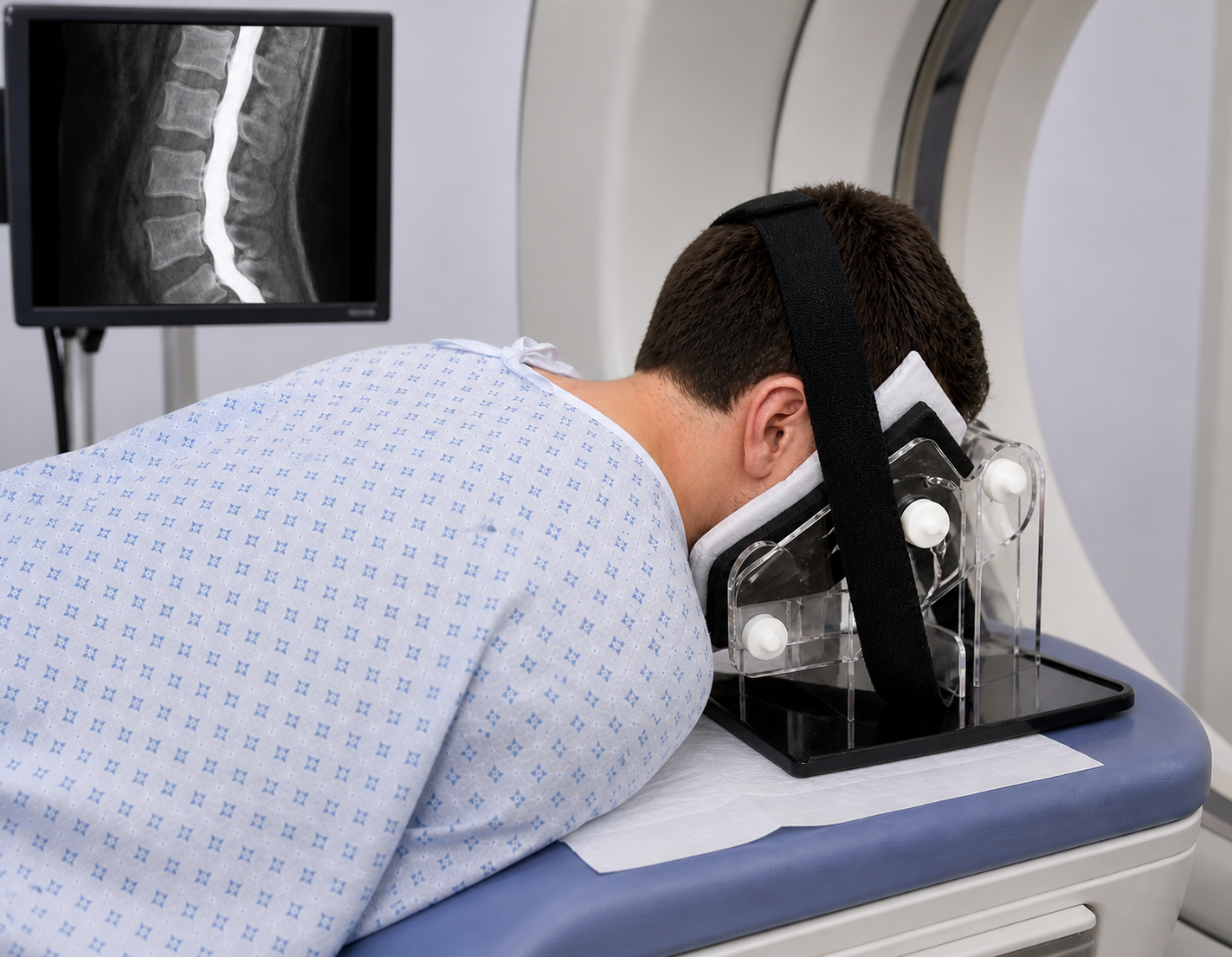
The Osborne Headrest
Precision Positioning. Open Airway Access. Proven Clinical Design.
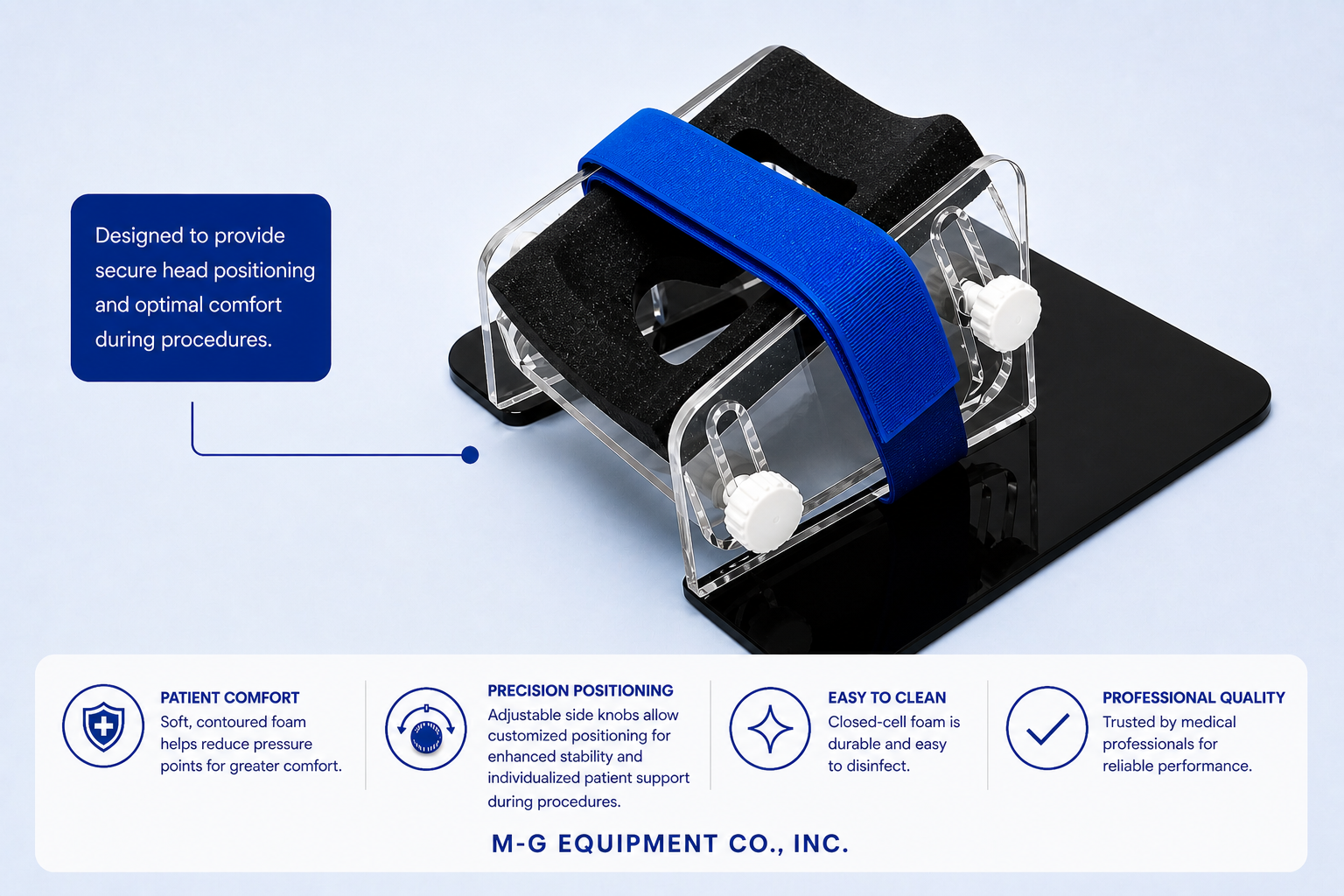
The Osborne Head Support System is a specialized prone positioning device engineered to provide secure head stabilization, adjustable positioning, and improved patient comfort during imaging, interventional, and surgical procedures.
Originally developed by Dr. Dennis Osborne of Duke University Medical Center, the Osborne was introduced in peer-reviewed neuroradiology literature in 1983 as an innovative solution for myelographic and CT examinations, where precise head extension and stable prone positioning are essential.
Designed for clinicians and trusted for decades, the Osborne continues to deliver reliable positioning support across a wide range of medical applications.
Why Clinicians Choose Osborne
✔ Precise angle adjustment
✔ Secure patient stabilization
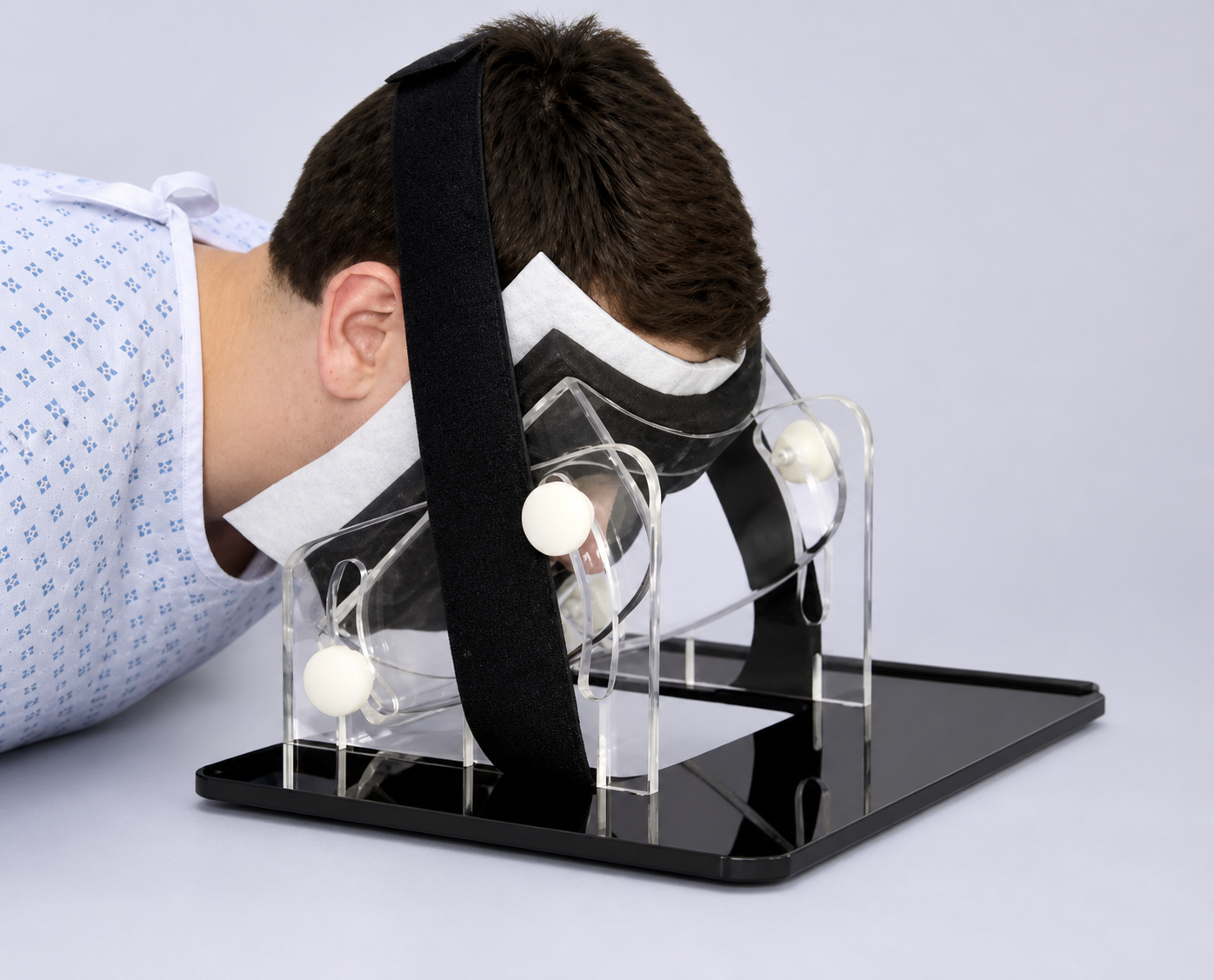
✔ Open airway and tubing access
✔ Comfortable prone positioning
✔ Imaging-compatible design
✔ Clinically proven heritage
✔ Trusted for decades
SPECIFIC APPLICATIONS
Myelographic Examinations
The Osborne was specifically designed for positioning the head while the patient is in the prone position—essential for most myelographic examinations. The adjustable support system allows carefully controlled head extension to maintain the contrast agent in the area of interest and enables controlled hyperextension of the neck when clinically required. Because the angle is adjustable, the degree of head extension may be altered during a study to achieve a more appropriate distribution of contrast media.
Prone CT Examinations
Slight alterations in head position—often necessary to eliminate patient artifacts during CT imaging—can be quickly achieved and securely maintained with the Osborne. Its adjustable knobs allow precise angle changes without compromising patient comfort or stability.
Prone Surgical Procedures
The Osborne has proven valuable in a variety of prone surgical procedures requiring secure head positioning. The open facial design allows unobstructed access to the mouth and nose for airway tubing, monitoring devices, and wire mechanisms while maintaining stable patient positioning throughout the procedure.
Interventional Radiology / Fluoroscopy
Ideal for prone fluoroscopic and image-guided procedures where precise head positioning is required. Adjustable head extension and stable positioning improve procedural control while the open airway design supports anesthesia and monitoring access.
Pain Management / Spine Procedures
Useful during prone spinal injections, nerve blocks, and other interventional pain procedures requiring consistent patient positioning. The Osborne’s precise angle adjustment allows clinicians to optimize neck extension and maintain patient comfort during longer procedures.
MRI / Diagnostic Imaging
The Osborne provides repeatable and adjustable prone head positioning during diagnostic imaging studies. Small positional corrections can be made quickly to improve alignment, reduce motion artifacts, and enhance imaging consistency.
Neurosurgical & ENT Procedures
The open facial support area accommodates breathing tubes, nasal access devices, and monitoring wires, making the Osborne well suited for specialized prone neurosurgical and ENT procedures requiring airway management and facial access.
Radiation Therapy / Oncology Positioning
Provides stable, reproducible prone positioning during treatment planning and therapy sessions. Adjustable head angle controls help achieve consistent patient setup and improve comfort during extended treatment times.
Physical Therapy / Rehabilitation
Can be used in therapeutic prone positioning applications where controlled cervical extension, patient comfort, and airway openness are important. The open design helps reduce claustrophobic sensation compared to enclosed face supports.
Outpatient & Ambulatory Procedures
Ideal for procedure rooms where prone positioning is needed for short or extended periods. The Osborne’s adjustable knobs, secure stabilization, and open airway design provide flexibility for a wide range of clinical uses.
Clinical Heritage
Supported by published clinical research including:
Technical Notes — American Journal of Neuroradiology
Improved Head Support for Prone Myelographic and CT Examinations
AJNR 4:1127–1128 (1983)